




Super Smash Bros. Melee (GameCube) — Price Guide & Live Deals
Live US Super Smash Bros. Melee GameCube deals: loose, CIB and sealed asking prices, Black Label vs Player's Choice, and what to verify.
Right now: prices roughly flat over 90 days, 12 current qualifying listings.
See 12 qualifying listings nowAsking-price ranges by condition
| Condition | Min | 25% | Median | 75% | Max | N |
|---|---|---|---|---|---|---|
| Loose | $42.99 | $47.00 | $53.98 | $59.99 | $99.00 | 16 |
| Cib | $54.00 | $64.99 | $81.00 | $85.00 | $99.85 | 10 |
| Sealed | $304.69 | $304.69 | $304.69 | $304.69 | $304.69 | 1 |
Asking prices of currently-active listings. Not sold-price data.
Is this a good price?
Enter a price to see where it falls among current Loose asking prices for Super Smash Bros. Melee (GameCube).
How we filter
Of the 578 listings we observed for this game in the last 30 days, we filtered out 252 of 578 (~44%) for quality reasons. The remaining 326 are what we'd actually surface.
- 122 matched a bootleg / out-of-scope keyword
- 89 seller had too few feedback ratings
- 21 seller positive-feedback percentage too low
- 8 priced below our floor (too good to be true)
- 8 wrong condition (e.g. parts-only)
- 4 priced above the curated ceiling
What this Smash Bros. Melee page covers
Live eBay listings for Super Smash Bros. Melee on Nintendo GameCube — the US-NTSC December 2001 release, not the Japanese release (titled Dairantou Smash Brothers DX — 大乱闘スマッシュブラザーズDX), not PAL European or Australian copies, and not any of the later Smash entries on different platforms. Melee was developed by HAL Laboratory under series director Masahiro Sakurai and published by Nintendo as a GameCube launch-window title; it sold tens of millions of copies and is the only mainline Smash Bros. entry released on GameCube. The feed filters strictly to the GameCube disc — the cart-platform Smash entries (Super Smash Bros. on Nintendo 64, Brawl on Wii, the 3DS / Wii U entry, and Ultimate on Switch) are different games on different hardware and trade in their own asking-price markets.
Melee occupies a particular place in the GameCube market. It's a high-volume title (tens of millions of copies sold worldwide), so listing inventory is deep and pricing is liquid across all condition tiers — you can shop it like a commodity. But it's also the disc that the competitive Smash community has played continuously for more than 20 years on original hardware, which keeps demand for working physical discs steady well past what raw nostalgia would predict. Buyers shopping these listings split between two groups: collectors building a GameCube library and competitive players sourcing tournament-ready hardware. Both groups want the same thing — an authentic disc that boots and reads cleanly.
Use the condition chips at the top of the deal grid to bucket what's surfaced:
- Loose — disc only, no case, no manual. The deepest bucket on Melee and the natural form of a heavily-played GameCube game once the original case is lost.
- CIB — complete-in-box: disc plus the original plastic clamshell case, cover-art insert, and instruction manual.
- Sealed — factory-sealed copies, mostly graded by WATA / VGA / CGC / PSA at this point, though ungraded sealed copies still surface occasionally.
Asking-price numbers in the table render from the last 24 hours of active US listings — they're seller asks, not realized sales. Treat them as the buyer's negotiating floor.
Smash Bros. Melee variants worth knowing
The substantive variants for Melee on GameCube are by retail print generation:
- US NTSC original print ("Black Label") — the original full-price retail release from December 2001, the first Smash Bros. title on GameCube. "Black Label" is collector terminology referring to the standard Nintendo case-spine artwork conventions of the era (no Player's Choice banner) rather than a specific Nintendo product designation. Listings emphasizing "Black Label" or "First Print" generally command a small premium over equivalent-condition Player's Choice copies.
- US Player's Choice reprint — Nintendo's budget-reprint line, with revised case spine artwork (typically a banner or colored stripe along the spine identifying the Player's Choice line). The Player's Choice reprint of Melee is widely listed on eBay; both Black Label and Player's Choice are authentic US-NTSC discs of the same game. The chip filter does not separate them — both surface together in the Loose / CIB buckets.
- "Best Seller" label — appears in listing titles inconsistently. Treat any specific "Best Seller" framing as needing verification against a clear photo of the case spine and back, since some listings use it interchangeably with Player's Choice and others use it as seller-side marketing language.
- Japan (Dairantou Smash Brothers DX / 大乱闘スマッシュブラザーズDX) — excluded by the feed. The Japanese release has a different official title, Japanese in-game text, and a different cover. Japanese-import sellers sometimes relist these with the English subtitle prepended for searchability; the feed filters
japan,japanese,jpn,dairantou,ntsc-j,dx melee,melee dx, and the JP product codegaljto catch the common patterns. - Europe / Australia PAL — excluded by the feed. PAL versions exist in multiple European language variants; if you specifically want a PAL copy, search separately.
Smash Bros. Melee: loose vs CIB vs sealed
Loose (disc only) is the entry-level bucket and the deepest by listing count. A loose GameCube disc has a 3-inch (8cm) mini-DVD form factor with a center spindle hub and a printed label face. The price spread within the loose bucket comes from disc surface condition (scratches, label wear, evidence of cleaning), seller-claimed authenticity, and whether the disc is being sold as a bare disc or with original case art. Loose Melee is one of the most heavily-listed GameCube discs on eBay, so listing volume per asking tier is high and outliers stand out clearly. Disc-only is a pragmatic buy on GameCube because there's no cartridge interior to worry about — the only verification surface is the disc itself.
CIB copies are heavily listed. A Melee CIB typically includes the plastic clamshell DVD-style case, the printed cover-art insert (the paper insert that slides into the case's transparent sleeve, showing the cover art on the front and back-of-box copy on the reverse), the instruction manual, and the original disc. The CIB asking-price gradient is driven primarily by case condition (cracks, hinge wear, scuffs, retailer price stickers), cover-insert condition (creasing, fading, ink rubbing), and whether the manual is present and undamaged. Partial CIBs — case + disc but missing the manual, or case + manual but disc heavily scratched — show up frequently and should price below a true complete copy. Black Label CIB copies trade at the higher end of the CIB asking range, with Player's Choice CIB lower.
Sealed copies for Melee at this point are almost exclusively graded by WATA / VGA / CGC / PSA. Ungraded factory-sealed copies still appear occasionally (typically Player's Choice reprints kept in shrinkwrap rather than original-print Black Label, which sealed-collectors graded out of the market years ago). The feed's $400 ceiling on this surface includes ungraded sealed and entry-tier graded copies; top-grade WATA / VGA copies of Melee (especially Black Label 9.4+ grades) trade above this ceiling and fall outside this surface — that's a deliberate scope decision, not an oversight. For investment-tier sealed buying, shop a dedicated graded-sealed surface.
Save behavior: GameCube uses memory cards, not on-disc batteries
A mental model to discard when shopping GameCube versus retro carts: GameCube games don't have save batteries. The disc itself is read-only optical media — all save data lives on the GameCube Memory Card, an external accessory that plugs into one of the console's memory card slots. This is fundamentally different from N64 / Game Boy / SNES carts, which often had on-cart battery-backed RAM that goes away when the coin cell dies.
For Melee specifically this means:
- There is no "dry battery / lost saves" concern on the disc itself. A loose disc that's been sitting in a closet for 20 years has the same save capability as one that's been actively played — saves are written to the buyer's own memory card at runtime.
- The buyer needs a GameCube Memory Card to save progress, unlock characters, save replays, or save tournament rules / button-config presets. Memory cards are sold separately. Nintendo's first-party cards are the most reliable; third-party memory cards exist but have a higher historical failure rate. Budget separately for one if you don't already own a working card.
- The "tested, working" / "saves work" claim on a listing refers to disc readability, not battery life — there is no battery to refer to. A seller saying "saves work" means the disc reads cleanly and the game writes save data to a card without errors. That's meaningful (it rules out disc rot and read errors), but it tells you nothing about save longevity, which is entirely on the memory card you plug in.
Don't pay a premium for "battery replaced" claims on a GameCube listing. If a seller is using that language, they're either confused about the hardware or hoping the buyer is.
Spotting counterfeit and reproduction discs
Melee is a high-volume, high-asking-tier GameCube title with active counterfeit production. Optical-disc reproduction is well-understood — any DVD-R press can produce a playable disc — and the loose-disc asking tier alone is high enough to make production economically attractive. The deal feed excludes listings whose own title says repro, reproduction, aftermarket, or contains the collector shorthand repo (whole-word match) — but a dishonest seller listing a counterfeit as "authentic" will reach the feed. The physical verification work is on the buyer.
The most reliable remote checks, in rough order of reliability:
- Disc label print quality. Authentic Nintendo-pressed GameCube discs have crisp, evenly-saturated multi-color label printing with consistent registration. Smudged ink, off-center placement, washed-out colors, or label paper with a rough printable-surface texture (rather than smooth, factory-press finish) suggest counterfeit. Reproduction disc labels are the single most common GameCube counterfeit attack surface; comparing against a high-resolution photo of a verified-authentic Melee label is the strongest remote check.
- Disc reflectivity and underside color. Authentic Nintendo-pressed GameCube discs have a uniform silver / metallic appearance on the data side. DVD-R recordable media typically shows a purple, blue, or gold tint characteristic of dye-based recordable layers; that tint is a strong counterfeit signal. This check is not definitive — high-quality counterfeit operations sometimes use pressed media — but the tint signal is the easiest single thing to see in a listing photo.
- Boot and gameplay verification on real hardware. The single most pragmatic test: does the disc boot the game on an actual GameCube (or GameCube-compatible Wii) and play correctly past the title screen, through multiple character-select transitions and into actual matches? Counterfeit discs that boot the menu but stutter or freeze mid-match exist; sellers willing to confirm they actually played the game (not just turned it on) are giving you the stronger signal.
- Case authenticity (CIB only). Reshelled cases — a counterfeit disc paired with a salvaged authentic case to look more legitimate — are common. The case being authentic doesn't make the disc authentic; disc-side checks remain the deciding factor.
- Cover-art insert quality (CIB only). Reproduction inserts exist (sold to CIB-assemblers). Look for fold marks suggesting the insert was actually used in a case rather than printed flat, color accuracy against reference photos, and consistent back-of-box ESRB rating and copy layout.
When in doubt, ask the seller for a high-resolution photo of the disc data side (the reflective underside), a close-up of the disc label face, and (for CIB) the case spine and back. Sellers who refuse all three at the asking tier this title commands are not sellers worth buying from.
A loose Melee disc asking sharply below the broader market median is the strongest single misrepresentation signal — outlier-cheap loose Melee in the US-NTSC market is typically counterfeit, a Japanese-import Dairantou DX disc relisted with the English title, or a disc with read errors the seller didn't fully disclose.
Smash Bros. Melee verification checklist by condition
Loose (disc only)
- Confirm the disc is a Nintendo-pressed GameCube mini-DVD (3-inch / 8cm), not a DVD-R recordable. Check the data-side appearance against an authentic reference photo.
- Look at the disc label face for print quality, registration, color saturation, and any signs of label replacement (mismatched edges, residue, generic-looking print).
- Ask whether the disc has been tested on real GameCube hardware (or a GameCube-compatible Wii) and played into actual matches, not just to the title screen.
- "Authentic" should be stated explicitly; "tested" should specify what was tested.
- Outlier-cheap is the strongest single counterfeit / misrepresentation signal on this title — a loose disc asking far below the broader market median deserves closer inspection or a hard pass.
CIB
- Confirm the case is the original Nintendo GameCube clamshell, not a third-party reshell or aftermarket reproduction case. The feed filters
replacement caselistings, but undisclosed re-shells won't self-identify. - Confirm the cover-art insert is present, printed (not photocopied), and shows fold creases suggesting it was actually used in a case rather than a flat reproduction. Verify the back-of-box copy matches reference photos.
- Confirm the manual is present, original, and intact — not a photocopy or modern reprint. The feed excludes
manual onlylistings, but always verify against the photos that the manual is original. - Disc-side checks from the Loose checklist still apply — case authenticity doesn't make the disc authentic.
- Case condition (cracks, hinge wear, indented retailer price stickers, scuffs from being stored loose with other cases) drives the CIB asking-price spread.
Sealed
- Almost always graded — verify the grading label is from a reputable house (WATA, VGA, CGC, PSA) and the population report supports the asking price.
- The sealed market is where forgery risk is highest. Resealed cases (a counterfeit or restored disc inserted into a case that was carefully reopened and re-shrinkwrapped) exist; sealed copies that haven't been graded by a reputable service deserve extra scrutiny.
- Ungraded factory-sealed copies are typically Player's Choice reprints. Original-print Black Label sealed copies have largely been graded out of the raw-sealed market.
- The feed's $400 ceiling cuts off the top-grade sealed tier. For high-grade sealed buying (WATA / VGA 9.4+), shop a dedicated graded-sealed surface — those copies trade in auction-house territory.
Smash Bros. Melee buying gotchas
- GameCube console + Melee bundles. Melee is one of the most common GameCube pack-in titles in console-bundle listings — sellers offload a console with Melee (and often a memory card and controller) as a single lot. The feed filters
console with,console system,console included,with console, andjet black consoleto keep per-game asking prices clean. If you want a console + game bundle, search separately; bundle pricing is asymmetric to per-title pricing. - Game Boy Player bundles. Some console listings pair Melee with a Game Boy Player accessory (the GameCube attachment that plays Game Boy / GBC / GBA carts). These get filtered out via
console systemandconsole withexcludes. The Game Boy Player itself is a separate product market with its own asking tier. - Multi-game lots. Melee bundles with Super Mario Sunshine, Mario Kart: Double Dash!!, Luigi's Mansion, Pikmin, Paper Mario: The Thousand-Year Door, Animal Crossing, and other first-party GameCube titles routinely. Lot listings get filtered out so per-game asking prices stay accurate; the feed excludes
lot,bundle,collection,set of,3 games/4 games/5 games, plus the most common GameCube-Nintendo-sibling tokens. - Tournament-mod memory cards posing as game listings. "20XX Training Pack" and similar competitive-Melee training-mode memory cards appear in Smash search results, sometimes at asking prices indistinguishable from disc listings. These are loaded memory cards, not game discs. The feed filters
training pack,competitive mod, andmemory card save. - Movie disc / Japanese promo discs. A "Super Smash Bros. Melee Movie Disc" or "Tournament Prize Sealed" sometimes appears on eBay — these are Japanese-region promotional discs and prize items, not the retail game. The feed filters
movie disc,prize promo, andprize sealed. They surface at very high asking prices when they appear and would otherwise distort the Sealed bucket. - JP Dairantou Smash Brothers DX re-titled. Sellers prepend "Melee" / "Super Smash Bros. Melee" to Japanese Dairantou DX listings hoping US buyers won't notice the region. The feed excludes
dairantou,dx melee,melee dx,smash dx,galj(JP product code),japan,japanese,jpn, andntsc-j. Listings that contain only "DX" without other region indicators can occasionally slip through —DXimmediately adjacent to "Melee" or "Smash" with no obvious English context is a JP-import flag. - Strategy guides. Official Player's Guides for Melee (Prima's, BradyGames, Nintendo Power) show up at moderate asking prices and are easy to mistake for game listings on a quick scan. The feed filters
prima,bradygames,brady games,strategy guide,official guide, andguide book. - Case-only / manual-only / no-disc listings. Partial-CIB component listings show up at low asking prices — sellers parting out a CIB into individual pieces, hoping a CIB-assembler will buy each part separately. The feed excludes
case only,case-only,custom case,clamshell only,replacement case,manual only,booklet only,no disc,disc not included,no game, andcase and manual. A small number of partial listings can still slip through when the title doesn't explicitly include an "only" qualifier — verify what's being sold against the listing photos before bidding. - Refurbished-suffix condition variants. Some sellers mark cleaned discs and reshelled cases as "Excellent - Refurbished", "Very Good - Refurbished", or "Good - Refurbished" rather than the standard condition tiers. The deal feed treats refurbished as a distinct condition not included in this surface — the asking-price tier on this page reflects authentic-original copies only. If you specifically want a refurbished copy, search separately.
- Disc resurfacing. Disc surface scratches can be machine-polished by reseller services to make a heavily-scratched disc look pristine. The polishing process removes a thin layer of the protective polycarbonate; lightly-polished discs play fine but a deeply-polished disc has a thinner-than-normal data layer and may degrade faster. A disc presented as "Like New" or "Mint" but described elsewhere as "professionally restored" is a flag.
- Disc rot on optical media. GameCube discs can suffer "disc rot" — chemical degradation of the data layer that causes read errors over time. Most authentic Nintendo-pressed GameCube discs have not significantly rotted as of the current shopping window, but the risk is non-zero, especially for discs stored in humid conditions. A seller's "tested and works" claim is your best signal; insist on testing into actual gameplay, not just the title screen, since disc rot often manifests on specific data sectors the menu doesn't touch.
- "Best Seller" branding ambiguity. "Best Seller" appears in listing titles as both a Player's Choice reprint synonym and as seller-side marketing language. If a price premium is being claimed for "Best Seller" framing, verify against a clear case-spine photo before paying it — the framing alone doesn't reliably identify a distinct print run.
- Outlier-cheap loose discs. A loose Melee disc asking sharply below the broader market median is the strongest single misrepresentation signal — either counterfeit, a JP-import disc mislabeled, or a disc with read errors not disclosed in the title. Authentic working loose Melee in the US-NTSC market doesn't trade at extreme discounts to the broader range.
- Seller feedback floor. The deal feed requires the seller to have ≥50 feedback at ≥99% positive. Low-feedback sellers with sharply-cheap Melee listings are a recurring fraud vector on a title with this asking tier and an active counterfeit scene. The feed quietly drops them, and the same heuristic protects you if you're shopping outside this surface.
How often qualifying deals appear
- 90 in the last 7 days (~12.86/day)
- 375 in the last 30 days (~12.5/day)
- 1131 in the last 90 days (~12.57/day)
Current qualifying listings

Super Smash Bros. Melee Nintendo GameCube CIB
$78.87 USD
Free shipping
★ 99.8% · 2,726 ratings
Super Smash Bros Melee (GameCube US NTSC) · 9/26/2026 7:29 PM

Super Smash Bros Melee GameCube
$64.99 USD
Free shipping
★ 100% · 539 ratings
Super Smash Bros Melee (GameCube US NTSC) · 9/26/2026 6:18 PM

Super Smash Brothers Melee Poster G3 Genesis 3 Leffen Hungrybox Mango Armada
$47.00 USD
Free shipping
★ 100% · 834 ratings
Super Smash Bros Melee (GameCube US NTSC) · 9/26/2026 5:53 PM
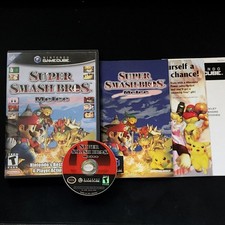
Super Smash Bros. Melee GameCube CIB Tested
$117.55 USD
Shipping calculated
★ 99.9% · 4,042 ratings
Super Smash Bros Melee (GameCube US NTSC) · 9/26/2026 1:30 PM
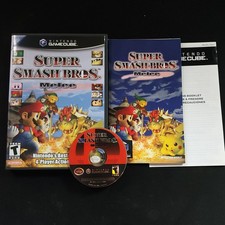
Super Smash Bros. Melee GameCube CIB Tested Authentic
$111.57 USD
Shipping calculated
★ 99.9% · 4,042 ratings
Super Smash Bros Melee (GameCube US NTSC) · 9/26/2026 1:28 PM
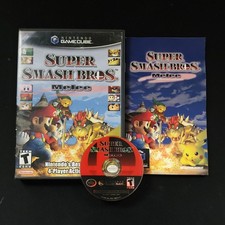
Super Smash Bros. Melee GameCube CIB NTSC-U/C Tested
$95.03 USD
Shipping calculated
★ 99.9% · 4,042 ratings
Super Smash Bros Melee (GameCube US NTSC) · 9/26/2026 1:23 PM
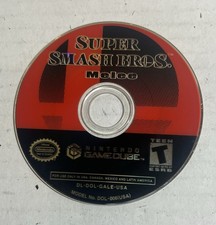
Super Smash Bros Melee - Nintendo GameCube 2001 - Disc Only Tested / Working
$49.99 USD
Free shipping
★ 100% · 2,371 ratings
Super Smash Bros Melee (GameCube US NTSC) · 9/26/2026 11:38 AM

Super Smash Bros Melee Nintendo GameCube CIB Tested and Works
$64.99 USD
Shipping calculated
★ 100% · 182 ratings
Super Smash Bros Melee (GameCube US NTSC) · 9/26/2026 9:09 AM
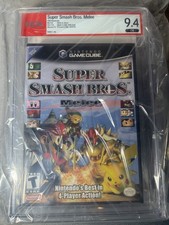
Super Smash Bros Melee Nintendo GameCube Game Complete PSA 9.4
$369.99 USD
Free shipping
★ 99% · 17,573 ratings
Super Smash Bros Melee (GameCube US NTSC) · 9/26/2026 7:12 AM

Nintendo GameCube DOL-008 Super Smash Bros. Melee Memory Card Variant RARE
$39.99 USD
Shipping calculated
★ 100% · 9,331 ratings
Super Smash Bros Melee (GameCube US NTSC) · 9/26/2026 6:38 AM
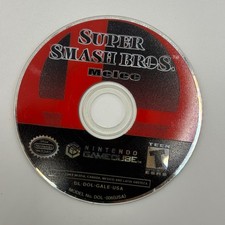
Nintendo Super Smash Bros. Melee (GameCube) Fighting, T, NTSC-U/C
$44.50 USD
Shipping calculated
★ 99.6% · 392 ratings
Super Smash Bros Melee (GameCube US NTSC) · 9/26/2026 2:08 AM

Super Smash Bros Melee Nintendo Gamecube Complete MARIO
$69.99 USD
Shipping calculated
★ 99.9% · 4,057 ratings
Super Smash Bros Melee (GameCube US NTSC) · 9/26/2026 1:36 AM
FAQ
How much is Super Smash Bros. Melee (GameCube) worth right now?
How often do qualifying deals appear?
Is Super Smash Bros. Melee (GameCube) reproduced or commonly faked?
More Nintendo GameCube deal pages
Embed this price badge

Data freshness: last snapshot 2026-09-26 00:00 UTC .