




Pokemon Emerald (GBA) — Price Guide & Live Deals
Live US Pokemon Emerald GBA deals, loose and CIB: fair asking prices, bootleg tells, and why a dry battery isn't the save-killer sellers claim.
Right now: prices easing (-39.4% / 90d), 12 current qualifying listings.
See 12 qualifying listings nowAsking-price ranges by condition
| Condition | Min | 25% | Median | 75% | Max | N |
|---|---|---|---|---|---|---|
| Loose | $150.00 | $222.74 | $238.99 | $251.10 | $304.91 | 23 |
| Cib | $689.00 | $689.00 | $689.00 | $689.00 | $1,499.99 | 2 |
| Sealed | $26.00 | $26.00 | $26.00 | $26.00 | $850.00 | 2 |
Asking prices of currently-active listings. Not sold-price data.
Is this a good price?
Enter a price to see where it falls among current Loose asking prices for Pokemon Emerald (GBA).
How we filter
Of the 1232 listings we observed for this game in the last 30 days, we filtered out 862 of 1232 (~70%) for quality reasons. The remaining 370 are what we'd actually surface.
- 427 matched a bootleg / out-of-scope keyword
- 195 shipped from a region we exclude
- 128 seller had too few feedback ratings
- 51 priced below our floor (too good to be true)
- 34 seller positive-feedback percentage too low
- 16 wrong condition (e.g. parts-only)
- 9 priced above the curated ceiling
- 2 RequiredAspect
What this Pokemon Emerald page covers
Live eBay listings for Pokemon Emerald Version on Game Boy Advance (the US-NTSC release) — not the Japanese Pocket Monsters Emerald original, not PAL European or Australian copies, not the Korean release, and not Pokemon Emerald ROM hacks like Emerald Kaizo, Emerald Rogue, or Emerald Multiplayer that aftermarket sellers occasionally list as physical "Emerald" carts. The feed sticks to US-NTSC original GBA carts. The box-art mascot is Rayquaza, the legendary dragon/flying-type Pokemon catchable in-game; Emerald is the third version of Generation 3, releasing in the US in May 2005 — two years after Ruby and Sapphire (March 2003) and a year after FireRed/LeafGreen (September 2004).
Emerald is the Gen-3 capstone. It expanded on Ruby and Sapphire by making both legendaries (Kyogre AND Groudon) catchable in the same playthrough, introducing the Battle Frontier as Emerald's signature post-game facility (replacing Ruby/Sapphire's simpler Battle Tower), and adding animated battle sprites that play when each Pokemon enters battle — a visible polish-pass over Ruby/Sapphire's static sprites that's often the first software-side tell collectors check.
The cartridge hardware is the same Gen-3 GBA family as Ruby, Sapphire, FireRed, and LeafGreen: small GBA-format carts with save-data on flash memory and a small coin-cell battery driving only the cart's real-time clock. The battery-vs-save story below matters more than buyers usually realize.
Use the condition chips at the top of the deal grid to bucket what's surfaced:
- Loose — cartridge only. The most common bucket and what most players buy.
- CIB — complete-in-box: cartridge plus the original outer box, cardboard tray, and instruction booklet.
- Sealed — factory-sealed or high-grade encapsulated copies. Almost always graded by WATA / VGA / CGC / PSA.
Asking-price summaries in the table render from the last 24 hours of active US listings — they are seller asks, not realized sales. Treat them as the buyer's negotiating floor, not the appraisal.
Pokemon Emerald variants worth knowing
The substantive variants for Pokemon Emerald are by region, and the deal feed actively filters non-US copies out:
- US NTSC — what this page surfaces. Rayquaza on the front of the box, English text, 2005 release year on the cardboard tray.
- Japan (Pocket Monsters Emerald) — excluded. Japanese carts have a different label, a different ROM build, and released ~7 months ahead of the US version (September 2004 JP vs May 2005 US). JP carts surface frequently on the US market via international sellers — high volume on this title specifically.
- Europe / Australia PAL — excluded. PAL Emerald copies exist in multiple language variants (English, French, German, Spanish, Italian) on differently-printed boxes. AUS PAL is a separate sub-variant.
- Korea — excluded. A Korean-language release exists and surfaces periodically.
- 3DS / Virtual Console — excluded. Pokemon Emerald was never released on the Nintendo 3DS Virtual Console (Gen-3 was never made available digitally, due to wireless trade compatibility constraints); however, sellers occasionally list mislabeled or third-party items as "Pokemon Emerald - Nintendo 3DS". The deal feed structurally aspect-locks on the
Game Name: Pokémon: Emerald VersioneBay item-specific so misaligned-platform listings are rejected even when the title is ambiguous.
If you want a non-US copy, search separately — asking prices, included documentation, the in-game language, and shipping landscape all differ by region.
There is no remake of Pokemon Emerald. Ruby and Sapphire were remade on the Nintendo 3DS in 2014 as Pokemon Omega Ruby and Pokemon Alpha Sapphire (ORAS). Emerald has never received an equivalent third-version remake — there is no "Omega Emerald" or "Alpha Emerald" or "Emerald 3D". The 3DS ORAS pair drew on Emerald's mechanics (catchable both legendaries, Battle Frontier-style facilities, sprite animations) but they remake Ruby and Sapphire, not Emerald. This matters when scanning listings: "Pokemon Emerald" listings labeled "Nintendo 3DS" or showing a 3DS cart in the photos are mislabeled, not a Pokemon Emerald 3DS release.
There is no widely-collected box-print "first run" variant for Emerald comparable to Pokemon Crystal's "Series" misprint or Pokemon Blue's "Red Text Error". Standard CIB asks fall in a relatively tight band driven by cosmetic box wear and insert completeness, not a known printing-variant premium.
Pokemon Emerald: loose vs CIB vs sealed
Loose is the working-collector default and by far the deepest bucket on this page: a bare cartridge. The spread within the loose bucket comes from cosmetic label condition, the state of the cart's internal battery (more on that below — and the conventional wisdom about it is wrong), and seller-claimed authenticity. Emerald loose carts ask in the mid- to high-triple-digits for a typical authentic copy, pricing meaningfully above Ruby and Sapphire — Emerald commands a premium because it's the third version with the Battle Frontier and the catch-both-legendaries gameplay loop, and supply is thinner than R/S.
CIB copies are meaningfully thinner on the market than loose. A Pokemon Emerald CIB typically includes the outer cardboard box, the cardboard insert tray that cradles the cartridge, the instruction booklet (the manual), and the standard Nintendo paperwork inserts of the era. CIB asks observed on the feed run from the upper-three-digits into the low-four-digits depending on box condition. The CIB price gradient is driven mostly by box wear (corner crush, label fade, tape residue, sun-bleaching of the spine) and whether every paper insert is present. Partial CIBs — box + cart but missing the manual or the tray — show up frequently and should price below a true complete copy.
Sealed copies for Pokemon Emerald are almost exclusively graded by WATA / VGA / CGC / PSA at this point, and even low-grade sealed Emerald copies ask significantly above this page's $1500 ceiling — the WATA 8.5 / PSA 9.6 / CGC 9.8 tier trades in the $3,000–$20,000+ range. The "Sealed" chip on the deal grid will usually be empty. This is by design — the deal feed surfaces what a working collector or player might realistically buy, not investment-grade graded sealed copies. If you're shopping graded sealed Emerald, expect to look outside this surface entirely.
Spotting Pokemon Emerald reproductions and bootlegs
Gen-3 GBA Pokemon carts (Ruby, Sapphire, Emerald, FireRed, LeafGreen) are heavily counterfeited — arguably the most-counterfeited generation of mainline Pokemon games. The combination of high collector demand, the relative simplicity of Gen-3 cartridge hardware, and 20+ years of bootleg refinement means a substantial fraction of "loose" Emerald listings on eBay are bootlegs or reshells. Emerald specifically is a hot counterfeit target because it commands a price premium over Ruby and Sapphire, so the dollar incentive to fake it is higher. The deal feed filters out listings whose own title says "repro", "reproduction", "aftermarket", "bootleg", "counterfeit", "knockoff", or "fake" — but a dishonest seller listing a bootleg as "authentic" will slip past keyword excludes. The verification work is on the buyer.
The most reliable physical tells, in rough order of reliability:
- Cartridge screw type. Authentic Nintendo Game Boy Advance cartridges use a specific Nintendo security screw on the back (not a standard Phillips head). A Phillips-head (cross-shaped) screw on the back of a Pokemon Emerald cart means the cart has been opened — either for a legitimate battery swap by a previous owner, or because it's a bootleg / aftermarket reshell. Phillips on the back is not by itself proof of fake, but it's a flag that the cart's interior is no longer factory-original. The specific Nintendo security screw used on GBA carts is well-documented in collector references — verify against a high-resolution photo of a known-authentic Emerald cart before treating screw type as the deciding factor.
- Label print quality. Compare against a known-good photo: authentic Emerald labels have crisp, evenly-saturated green-toned printing with consistent registration and the Rayquaza-themed cart label artwork. Smudged ink, off-center placement, washed-out colors, label paper that feels too glossy or too matte versus reference, or "newer than the cart" looking labels all suggest aftermarket. Reproduction labels are one of the most common Gen-3 counterfeit attack surfaces, and Emerald's green-label color is occasionally faked with the wrong shade of green (off-saturation, more teal than the authentic emerald-green).
- Sprite animation on battle entry. Emerald specifically added animated sprites that play a short animation when each Pokemon enters battle (a polish-pass over Ruby/Sapphire's static sprites). The animations are part of the licensed ROM and are present on every authentic cart. If you can boot the cart on real hardware and start a wild battle, watch for the entry animation — if the sprite snaps in statically with no animation frame, that's suspicious. This is a software-side check that's harder for a casual bootleg to get exactly right, though more sophisticated bootlegs of recent vintage usually carry the full Emerald ROM and will animate correctly.
- Cartridge weight and PCB. If you can request an interior photo (cart open), authentic Gen-3 Pokemon PCBs have specific component layouts and ROM/flash chip markings that bootleg boards rarely match. Sellers willing to send an interior photo on request are usually the more trustworthy ones. A bootleg with a fresh-looking PCB next to "this cart is from 2005" listing copy is a contradiction worth questioning.
- Save behavior on actual hardware. Many bootlegs save fine in single sessions but fail to retain saves across power cycles, or save in ways that don't preserve all state. Ask whether the seller has actually played the cart for more than a few minutes (run through the first few gym leaders), and confirmed saves persist after power-off.
When in doubt, ask the seller for a high-resolution photo of the back of the cart showing the screw, the label up close, and (if comfortable) the interior PCB. Sellers who refuse all three are not sellers worth buying from on a Gen-3 cart, and especially not on an Emerald cart at the $300+ tier.
The deal feed also filters out the aftermarket-reshell category — carts marketed as "authentic OEM PCB in premium aluminum / anodized / custom shell". These are typically a genuine Nintendo PCB transplanted into a non-OEM shell, which some collectors value (the ROM and save chip are original) and others reject (the shell is not factory). They're a real category but distinct from both authentic-original and outright-bootleg, and the feed excludes them so the loose-cart asking-price tier reflects authentic-original carts only.
There's an Emerald-specific outlier-cheap signal worth noting: listings priced sharply below the loose median frequently turn out to be reproductions, "Repo"-shorthand listings, mislabeled Japanese carts, or sellers describing the cart with words like "remake" in ambiguous ways. Treat aggressive price discounts on an Emerald cart with extra skepticism — the dollar premium that makes Emerald a counterfeit target also makes "$40 authentic Emerald" listings the strongest single repro signal short of the seller saying so.
Battery life: the Gen-3 caveat that buyers consistently misunderstand
Every Pokemon Emerald cartridge has a small coin-cell battery soldered to the PCB, and this is where Gen-3 differs in a buyer-decision-driving way from Gen-1 and Gen-2 carts.
On Gen-1 (Red / Blue / Yellow) and Gen-2 (Gold / Silver / Crystal) carts, the battery powers the save RAM — when the battery dies, the save is lost. On Gen-2 the same battery also powers the in-game real-time clock, but the save dependency is the headline failure.
On Gen-3 (Ruby / Sapphire / Emerald / FireRed / LeafGreen) carts, the save data lives in flash memory on the cartridge — not battery-backed RAM. The flash chip does NOT need a battery. The coin cell on a Gen-3 Pokemon cart powers ONLY the cart's real-time clock (RTC) chip, which drives in-game time-based mechanics: berry growth cycles, Mirage Island calculations, Shoal Cave tide timing, the daily Lottery, and the day-night encounter shifts for time-locked Pokemon.
The practical consequence: when the battery dies on a Pokemon Emerald cart, you do NOT lose your save. You lose berry growth and time-based events. The game is fully playable end-to-end with a dead battery, including the Battle Frontier (which doesn't depend on the RTC) — only the time-dependent side mechanics break. Many sellers say "dry battery, won't save" and they're wrong; the cart will save fine, the time-based features just won't work. Listings that say "DRY BATTERY NO CLOCK" or "Dry Battery — saves fine, no time events" are the sellers getting it right.
This matters for asking prices: the premium that a "new battery installed" listing commands is mostly worth less than buyers think it is, because the failure mode is loss of berry/time mechanics, not loss of saves. If you don't care about berry trees or time-locked encounters, a "dry battery" cart at a discount is the same play experience as a "new battery" cart at the markup.
- "New battery installed" listings are worth a small premium if you specifically care about berry growth, Mirage Island, Shoal Cave, the daily lottery, or time-based encounters and want them working out of the box.
- "Tested, saves" without a battery-replacement note means the original battery is still in there; the save will work indefinitely regardless of the battery's state. Plan for berry/time mechanics to fail at some point if the battery hasn't already gone dry.
- "Doesn't save" on a Gen-3 cart is NOT a battery problem — it's a save-flash problem (worn flash chip, damaged PCB trace, or possibly a bootleg with bad flash). Treat it differently from "dry battery / no clock" listings.
The battery itself is a small coin cell. The exact cell type varies across cart PCB revisions and individual reseller reports — verify against a high-resolution photo of the specific cart's PCB before ordering replacements. Don't trust generic "Gen-3 uses cell X" claims from any single source.
Pokemon Emerald verification checklist by condition
Loose
- Confirm the back-of-cart screw is the original Nintendo security screw (not Phillips). Phillips = opened or aftermarket — ask the seller why before treating it as authentic.
- Look for label condition: tears, water damage, residue from old price stickers, missing label entirely. Compare against a known-authentic Emerald label photo, paying attention to the green-tone saturation (off-shade greens are a repro tell).
- Ask whether the original battery is still in place or has been replaced. Confirm whether saves work (Gen-3 save chip, not battery-dependent) AND whether the in-game clock advances (the actual battery test).
- If possible, ask the seller to confirm the sprite-entry animation plays on real hardware — a software-side tell against casual bootlegs.
- "Authentic" should be stated explicitly; "tested" should specify what was tested — save persistence, time-of-day advance, Battle Frontier access, or some combination.
- Treat any loose Emerald asking sharply below the broader market median as a flag for closer inspection — Gen-3 Pokemon outlier-cheap is the single strongest repro signal short of the seller saying so, and Emerald specifically attracts more counterfeit attention than R/S because of its price premium.
CIB
- Confirm box presence (outer cardboard, not a "modern production box" or third-party acrylic case standing in for the box).
- Confirm the cardboard insert tray that holds the cartridge — a meaningful piece of "complete" and frequently missing on partial CIBs.
- Confirm the manual is present, not a photocopy or modern reprint.
- Confirm the paper inserts are present (the standard Nintendo paperwork of the era — specific contents varied by print run, so verify against a reference photo if completeness matters to you). At Emerald's CIB price tier, paying for "complete" without verifying every paper insert is risky.
- Box wear (corner crush, label fade, tape residue, sun-bleaching) drives a meaningful spread in CIB asking prices.
Sealed
- Almost always graded — verify the grading label is from a reputable house (WATA, VGA, CGC, PSA) and the population report supports the asking price.
- The sealed market is where forgery risk is highest, and Gen-3 sealed has been a forgery target because counterfeit-PCB carts have been reshelled into convincingly-resealed boxes. Go through a reputable grading service or a seller with a long retro-game-specific track record.
- Expect to shop outside this surface for serious sealed buying — the feed's $1500 ceiling sits well below the entry point of the graded-sealed Emerald market, which trades meaningfully higher than graded-sealed Ruby or Sapphire.
Pokemon Emerald buying gotchas
- Region confusion. Sellers occasionally list Japanese, Korean, or PAL Emerald copies under generic "Pokemon Emerald Game Boy Advance" titles. Japanese Emerald carts are particularly common on the US market — observed at high volume this session via international resellers. The deal feed filters by structured item-location country (excluding listings shipping from JP / HK / CN / KR / TW) and excludes obvious region keywords (japan, japanese, jpn, NTSC-J, EUR, PAL, korean, AUS, language names) — but if you're shopping outside this feed, look for explicit "USA" / "US version" wording and the Hoenn dex shown in English on any in-game screenshot.
- No Pokemon Emerald 3DS remake exists. Unlike Ruby/Sapphire (remade as ORAS for 3DS in 2014), there is no Omega Emerald / Alpha Emerald / 3DS Emerald remake. Listings titled "Pokemon Emerald - Nintendo 3DS" are mislabeled, third-party items, or repackaged content — not an official re-release. The deal feed structurally aspect-locks the
Game Nameitem-specific to "Pokémon: Emerald Version" and excludes 3ds / nintendo 3ds / virtual console keywords. - No Pokemon Emerald Virtual Console release. Gen-3 Pokemon was never released on the 3DS Virtual Console (Gen-1 and Gen-2 were, Gen-3 was not, due to wireless trade compatibility constraints). Any listing claiming a "VC code" for Emerald is misleading or fraudulent.
- Bootlegs in "authentic" clothing. As covered above, Gen-3 Pokemon is heavily counterfeited and Emerald is the most-targeted Gen-3 title because of its price premium. The deal feed filters out listings that self-identify as repro/aftermarket, requires a seller-feedback floor (≥50 feedback at ≥99% positive), and uses structured eBay item-specifics for
Game Namematching where available — but a dishonest seller listing a bootleg as "authentic" inside the feedback floor will reach the feed. Always verify the cart physically using the checks above before treating the listing as a buy. - "Repo" as collector shorthand for reproduction. Some sellers describe their carts as "(Repo)" — collector slang for "reproduction" — without using the full word. Listings using "Repo" / "Repo cart" are bootlegs disclosed by shorthand, and the feed's
reprosubstring exclude doesn't always catch the shorter form. If you see "Repo" in a title, treat it the same as "reproduction" — not authentic. - The "dry battery = won't save" misconception. Sellers and buyers both repeat this on Gen-3 carts because it WAS true for Gen-1 and Gen-2. It is NOT true for Gen-3. An Emerald cart with a dry battery saves fine — only time-of-day mechanics break, including berry growth, Mirage Island, Shoal Cave tides, and the daily lottery. Don't overpay for "new battery installed" listings unless you specifically care about those mechanics. Don't reject "dry battery" listings out of fear of lost saves.
- Multi-game lots. Pokemon Emerald almost always shows up bundled with Ruby, Sapphire, FireRed, LeafGreen, or larger Gen-3 sets on eBay — the Emerald + R/S + FR/LG five-game lot is a common bundle. Lot listings get filtered out here so per-game asking prices stay accurate, but a lot can be a great deal if you wanted multiple Gen-3 titles anyway — search separately for those.
- Pokemon-themed GBA SP console bundles. Pokemon-branded Game Boy Advance SP consoles (Pikachu Edition, Charizard Edition, Pokemon Center commemoratives, Rayquaza-shell and other Pokemon-themed shells) frequently get listed with a Pokemon Emerald cart bundled. The feed filters these out (
pokemon center,pokedex edition,advance sp,charizard edition,rayquaza shell,groudon shell,kyogre shell,pikachu yellow, model-number whole-word excludes), but they're a frequent source of confusion outside this surface. - Aftermarket reshell carts. Listings titled "Authentic OEM PCB in Premium Anodized Aluminum Shell" pair a genuine Nintendo Emerald PCB with a non-OEM shell. Some collectors value these, some don't. The feed excludes them (
reshell,aluminum shell,anodized aluminum) so the loose-cart tier reflects authentic-original carts. If you specifically want a reshell, search separately. - Wireless adapter bundles. Gen-3 GBA Pokemon shipped with optional support for the Game Boy Advance Wireless Adapter (the small dongle that plugs into the GBA link port). "Pokemon Emerald + Wireless Adapter" listings price higher than cart-alone for the adapter accessory, not the cart, and skew asking-price averages if mixed in. The feed excludes
wireless adapterlistings so the cart-only tier reflects cart-only pricing. If you specifically want the adapter, search separately. - Pokemon Pinball: Ruby & Sapphire is a separate title. A 2003 GBA pinball spinoff by Jupiter shares "Ruby" and "Sapphire" in its name but doesn't share "Emerald" — so it doesn't directly confuse this page's title-token gate. Mentioned here for completeness in case it appears in adjacent shopping.
- ROM hack confusion. Pokemon Emerald is one of the most-modded ROMs in the hobby — Emerald Kaizo, Emerald Rogue, Emerald Multiplayer, and dozens of others. These occasionally surface as physical "Emerald" carts on aftermarket flash hardware. The feed excludes hack-related keywords (
rom hack,romhack,kaizo,destiny deoxys,emerald rogue,emerald multiplayer); if you wanted a hack cart specifically, search separately and verify what flash hardware is inside before buying. - Strategy-guide / manual-only listings. The Pokemon Emerald Prima and Nintendo Power strategy guides and stand-alone manuals show up at $20–$60 and are easy to mistake for cart listings on a quick scan. The feed filters them out by phrasing (
manual only,guide only,booklet only,prima guide,prima official,strategy guide,player's guide,trainer's guide). - Box-only / inserts-only listings. "BOX AND INSERTS ONLY", "POSTER ONLY", "Pokemon Emerald Poster Insert" — these are partial-CIB component listings that don't include the cart. They show up at $75–$800 (the higher end is a high-quality box that someone is selling separately, hoping a CIB-assembler will buy). The feed excludes them so the CIB tier reflects actual complete-in-box listings, not box-only.
- "For parts" listings. Sellers occasionally list broken Emerald carts as "FOR PARTS" with the condition field set to "Good" — a misalignment between eBay's structured condition and the actual functional state. The feed excludes
for partsso the asking-price tier reflects working carts; if you specifically want a broken cart for the PCB or label, search separately. - Seller feedback floor. The deal feed requires the seller to have ≥50 feedback at ≥99% positive. Low-feedback sellers with cheap Pokemon Emerald listings are a recurring fraud vector — given Gen-3's counterfeiting rate AND Emerald's premium pricing, the feedback floor is doing real work here. The feed quietly drops them, but the same heuristic protects you if you're shopping outside this surface.
How often qualifying deals appear
- 89 in the last 7 days (~12.71/day)
- 422 in the last 30 days (~14.07/day)
- 1214 in the last 90 days (~13.49/day)
Current qualifying listings
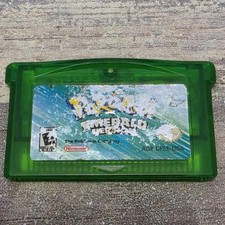
Pokemon Emerald Version Nintendo GBA Authentic Tested Good Battery
$210.00 USD
Free shipping
★ 99.9% · 7,853 ratings
Pokemon Emerald (GBA) · 9/27/2026 12:37 AM

Pokemon Emerald Game Boy Advance Authentic CIB Complete w Manual Box
$689.00 USD
Free shipping
★ 100% · 12,794 ratings
Pokemon Emerald (GBA) · 9/26/2026 10:06 PM

Pokemon Emerald Nintendo Game Boy Advance Game Authentic READ For Repair
$220.00 USD
Free shipping
★ 100% · 12,794 ratings
Pokemon Emerald (GBA) · 9/26/2026 10:06 PM
Pokemon Emerald (Nintendo GameBoy Advance, 2005)
$239.99 USD
Free shipping
★ 99.4% · 1,556 ratings
Pokemon Emerald (GBA) · 9/26/2026 8:37 PM
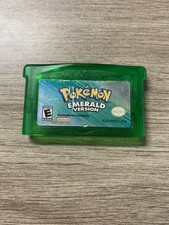
Pokemon Emerald - Nintendo Game Boy Advance AUTHENTIC WORKING! C
$249.99 USD
Free shipping
★ 99.7% · 6,627 ratings
Pokemon Emerald (GBA) · 9/26/2026 7:49 PM

Pokemon Emerald Version (Nintendo Game Boy Advance) GBA Authentic Dry Battery
$200.00 USD
+$5.30 shipping
★ 100% · 2,539 ratings
Pokemon Emerald (GBA) · 9/26/2026 7:17 PM
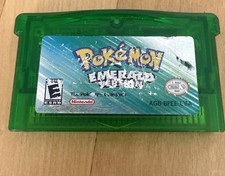
Pokemon Emerald Version Authentic, GBA Game Boy Advance, Model AGB-002
$230.00 USD
Free shipping
★ 100% · 1,113 ratings
Pokemon Emerald (GBA) · 9/26/2026 6:26 PM

Pokemon Emerald Version (Nintendo Game Boy Advance) GBA Authentic Dry Battery
$222.74 USD
Shipping calculated
★ 100% · 237 ratings
Pokemon Emerald (GBA) · 9/26/2026 5:34 PM

NEW BATTERY!! Pokemon Emerald - GAME ONLY - NINTENDO Gameboy Advance 926a
$238.99 USD
Free shipping
★ 100% · 64,726 ratings
Pokemon Emerald (GBA) · 9/26/2026 3:10 PM
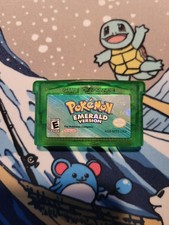
Pokemon Emerald Version (Nintendo Game Boy Advance, 2005) - AUTHENTIC & TESTED
$225.00 USD
Shipping calculated
★ 100% · 569 ratings
Pokemon Emerald (GBA) · 9/26/2026 2:35 PM

Pokemon Emerald Version * New Battery * (Game Boy Advance) * AUTHENTIC * - READ
$260.00 USD
+$3.99 shipping
★ 100% · 19,273 ratings
Pokemon Emerald (GBA) · 9/26/2026 12:43 PM
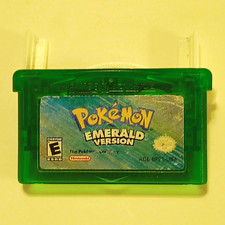
Pokemon Emerald (Nintendo Game Boy Advance 2005) GBA Authentic New Battery DS Li
$249.95 USD
Shipping calculated
★ 100% · 183 ratings
Pokemon Emerald (GBA) · 9/26/2026 6:05 AM
FAQ
How much is Pokemon Emerald (GBA) worth right now?
How often do qualifying deals appear?
Is Pokemon Emerald (GBA) reproduced or commonly faked?
More from this franchise
Embed this price badge

Data freshness: last snapshot 2026-09-27 00:00 UTC .