




Super Mario World (Super Nintendo) — Live Deals & Price Guide
Live US-NTSC Super Mario World SNES deals across loose carts, CIB, and graded sealed. What a fair asking price looks like, how to separate the original from the All-Stars combo and GBA Mario Advance 2 port, and what to check before you click buy.
Right now: prices easing (-88.3% / 90d), 12 current qualifying listings.
See 12 qualifying listings nowAsking-price ranges by condition
| Condition | Min | 25% | Median | 75% | Max | N |
|---|---|---|---|---|---|---|
| Loose | $10.95 | $17.95 | $19.99 | $33.00 | $64.99 | 37 |
| Cib | $29.99 | $29.99 | $29.99 | $29.99 | $540.00 | 2 |
| Sealed | $14.99 | $14.99 | $28.95 | $28.95 | $49.99 | 3 |
Asking prices of currently-active listings. Not sold-price data.
How we filter
Of the 2646 listings we observed for this game in the last 30 days, we filtered out 1848 of 2646 (~70%) for quality reasons. The remaining 798 are what we'd actually surface.
- 1472 matched a bootleg / out-of-scope keyword
- 178 seller had too few feedback ratings
- 70 wrong condition (e.g. parts-only)
- 55 seller positive-feedback percentage too low
- 52 priced below our floor (too good to be true)
- 21 priced above the curated ceiling
Super Mario World shipped in August 1991 as the pack-in launch title for the US Super Nintendo Entertainment System and went on to become one of the best-selling games on the platform. It's the debut of Yoshi, the introduction of Cape Mario, and the canonical 16-bit Mario platformer — which is exactly why the cartridge market for it is large, well-discovered, and full of look-alikes. The feed below pulls current eBay listings that match the original US-NTSC SNES release, filtered to authentic-claim sellers with a meaningful feedback history. Pick a condition chip — All, Loose, CIB, or Sealed — to scope what's shown; the editorial below explains what each tier should actually include and what to verify before buying.
What the feed shows you (and what it doesn't)
The deals on this page surface the original 1991 US-NTSC Super Nintendo release as a standalone cartridge — the cart, the box, or graded copies of either. They deliberately filter out:
- Super Mario World 2: Yoshi's Island. This is a different game on the same platform — released 1995, the gameplay is built around protecting Baby Mario as Yoshi, not Mario's own platforming. It happens to share all three of the title tokens "super", "mario", and "world", which is why the feed has to explicitly exclude
yoshiandisland. If you're shopping for Yoshi's Island specifically, search separately — different SKU, different price market. - Super Mario All-Stars + Super Mario World combo cart. Nintendo released a later SNES combo cart that bundles the four Super Mario Bros. games from All-Stars plus Super Mario World on a single cartridge — a different SKU from the standalone Super Mario World release, frequently sold bundled with the SNES console as a system pack-in. Both the original All-Stars and the combo are excluded by name (
all-stars,all stars,allstars,4 in 1,4-in-1). - Super Mario Advance 2: Super Mario World (2002, Game Boy Advance). Nintendo ported Super Mario World to the GBA in 2002 as the second entry in the Super Mario Advance series. It is the same game's level design with re-recorded audio, added voice clips, and a Luigi-as-playable mode, but it is a GBA cart on different hardware and a separate price market. Excluded by
advance,gba,game boy advance. - Switch Online / Wii / Wii U / Virtual Console / SNES Classic. Nintendo has shipped Super Mario World as a digital re-release across most subsequent platforms (Wii Virtual Console, Wii U Virtual Console, New 3DS Virtual Console, Nintendo Switch Online) and as one of the 21 built-in titles on the Super NES Classic Edition mini-console. Those are not physical SNES cartridges. Excluded by
virtual console,wii,wii u,switch online,nso,super nintendo classic,snes classic,snes mini,nintendo classic mini. - Japanese Super Famicom imports. The Japanese release shipped on the Super Famicom in November 1990 — actually before the US release. The Japanese cartridge is a different physical shape, the ROM is in Japanese (though SMW has minimal text), the carrier code is different from the US SNS-MW-USA code, and the asking-price tier is well below US copies. Excluded by
super famicom,famicom,shvc,japan,japanese,jpn,ntsc-j. - PAL / European / Australian releases. Different region SKUs that won't natively boot on a US NTSC SNES without a region adapter or a region-modded console. Excluded by
pal,eur,europe,european,uk,australia,australian,aus. - ROM-hack carts. Super Mario World has one of the most active ROM-hacking scenes in retro gaming —
Super Mario World: The Second Reality Project,Super Mario World: Return to Dinosaur Land,Brutal Mario, theStar Roadhack, and countless others. These ship as homebrew flash carts in a real SNES shell and sellers occasionally list them under "Super Mario World" with the hack name appended. Excluded by name (rom hack,hack,star road,return to dinosaur land,super mario world rom). - Multi-game lots, strategy guides, manuals-only, boxes-only, broken/parts-only, controllers, plush, figures, posters, soundtracks, amiibo, and the rest of the surrounding Mario merch. The feed is the cartridge market, not the Mario-merchandise market.
Asking prices in the live feed reflect what sellers are asking in this snapshot. Actual sold values can run lower (especially after offer negotiation on CIB tier).
Loose vs CIB vs Sealed for this title
Loose is the deepest bucket. Super Mario World had a large US print run — it was the SNES pack-in launch title and Nintendo kept manufacturing it for years — so bare cartridges trade at the most accessible tier of any SNES first-party platformer. Loose asking spread is driven by cosmetic label condition (the cart label artwork is glossy and fades / wears in characteristic ways over 30+ years), authenticity claims, and save behavior on real hardware. Even a label-worn loose copy still plays the same game.
CIB ("Complete In Box") for the original 1991 SNES release should mean: the original cardboard outer box, the cardboard inner tray that cradles the cartridge, the instruction manual, and the standard Nintendo paperwork inserts of the era (specific contents varied across print runs). Super Mario World CIB asking sits a tier above loose because the cardboard outer box is fragile and frequently damaged — corner crush, label fade, tape residue from store-shelf price labels, and sun-bleaching on the spine all drive spread. The cardboard inner tray is also commonly missing or replaced with a reseller-fabricated tray. Listings that describe themselves as "complete" without confirming the tray are CIB-minus.
Sealed for Super Mario World SNES is almost exclusively graded by WATA / VGA / CGC / PSA at this point. Raw factory-sealed copies essentially do not exist outside graded slabs — given the title's age, asking-price tier, and the well-documented re-seal counterfeit market, any raw "sealed" Super Mario World copy at a market-rate asking price deserves heavy skepticism. The Sealed bucket on this page reflects graded slabs in a moderate-grade range; top-grade investment-tier copies (WATA 9.4+ / CGC 9.6+ first-print) trade well above this surface's price cap and belong in the auction-house market, not the deal-page market.
Variants and reprints to know
Super Mario World had a long US print life and shipped in more than one packaging variant. The most common are:
- Original 1991 print. The launch-window print run — distinguished by box artwork that does not carry a Player's Choice banner. Within the original print there were multiple production batches (carts manufactured at facilities in Mexico, Japan, and elsewhere depending on year — the country-of-origin notation on the back of an authentic US cart is a standard manufacturing-location stamp, not a variant indicator). First-print boxes in clean condition ask a premium over later prints among completionist collectors.
- Player's Choice budget reprint. Nintendo added a Player's Choice banner to the box artwork on titles that crossed a sales threshold; Super Mario World qualified and shipped in this packaging during the mid-late SNES era. The Player's Choice banner runs across the top of the box and is unmistakable when the box top is shown clearly in a listing photo — if the listing only shows the box front-on and crops the top, ask the seller for a top-of-box photo before paying first-print prices. Player's Choice boxes typically ask below first-print boxes for the same condition tier.
- Super Mario All-Stars + Super Mario World combo cart. A separate SKU — described above under the exclusion list. The Player's Choice version of the combo cart also exists. The feed excludes both regardless of variant.
The cartridge label artwork on the original-release and Player's Choice prints is essentially identical at the cart level — the variant lives in the box artwork, not on the cart. A loose-cart listing therefore can't be variant-identified on cart photos alone; you're buying "a Super Mario World cart" regardless of what print the box originally came from.
Spotting Japanese imports re-listed as US copies
This is a recurring confusion vector on any iconic Nintendo title. The Japanese Super Famicom version of Super Mario World predates the US release by about ten months and continues to trade meaningfully below US copies. Sellers in Japan and the wider Asia-Pacific market sometimes list Japanese carts in US-targeted searches with phrasings like "Super Mario World SNES" and let the buyer discover the region after purchase.
The reliable tells:
- Cartridge shape. US Super Nintendo carts have a tall rectangular shell with curved ridges along the top and a paper label in the standard SNES label format. Japanese Super Famicom carts are physically smaller, more square, and use a different label layout. A photo showing the bare cart silhouette resolves region in two seconds. Japanese Super Famicom carts will not fit a US SNES cartridge slot without a physical adapter.
- Product-code prefix on the back-of-cart label. Authentic US Super Nintendo carts carry the prefix
SNS-(Super Nintendo System) on the back-label product code. Japanese Super Famicom carts useSHVC-(Super Hi-Vision Cassette). A clear back-label photo is the definitive structured signal. - Box-art language. The Japanese box uses Japanese script and frequently includes a Japanese subtitle alongside the Super Mario World logo. The US box uses English-only marketing copy.
- Region in the listing title. Sellers honestly identifying region use
NTSC-U/C(US / Canada),USA,US, orNorth America; Japanese sellers useNTSC-J,JPN,Japan,Japanese,SFC,Super Famicom, or the bare product-code prefixSHVC. The feed excludes these keywords but a few slip through when sellers use only the structured product code with no region word — verify the cart photo before bidding.
A Japanese cart isn't a fake or a bad product — it's a different SKU. If you specifically want the Japanese release (cheaper, with the Japanese box art that some collectors prefer), shop for it explicitly with a Super Famicom adapter or a region-modded SNES.
Spotting reproductions and reshells
Super Mario World has a meaningful counterfeit market because (a) the cart is iconic enough that demand is unconditional, (b) the ROM is well-documented and trivial to flash to aftermarket SNES-form-factor hardware, and (c) the loose-cart asking tier is high enough on first-print clean-label copies to make a bootleg economically attractive. Most carts on the market are authentic; the dishonest fraction is meaningful and worth checking against.
- Reproduction carts with counterfeit labels. The most common attack: a flash cart in a generic SNES shell with a counterfeit Super Mario World label glued on, listed at slightly-below-market price. The feed excludes self-disclosed
repro,reproduction,aftermarket, and whole-wordrepolistings, but a dishonest seller listing a bootleg as authentic at a low feedback floor still slips through. Verification work falls on you. Watch for: label printing that's too crisp / too matte / too glossy compared to a 30-year-old factory label, label artwork that doesn't match an authentic reference photo (Super Mario World's label uses a specific shade of red background and a specific Mario-and-Yoshi artwork crop — counterfeits frequently get the color or crop subtly wrong), a back-of-cart screw that isn't the original Nintendo security screw (a Phillips head on the back means the cart has been opened — could be a legitimate save-battery swap, could be a reshell, could be a bootleg), and asking prices unusually below the loose-cart market median. - ROM-hack carts. Super Mario World is the platform of choice for SNES ROM hacking — Star Road, Return to Dinosaur Land, The Second Reality Project, Brutal Mario, Mario Adventure, and many others are circulated as homebrew flash carts in SNES form factor with custom labels. Sellers honestly identify the hack name in the listing title. The feed excludes them by name but new hack names appear continuously; if a listing title says any qualifier other than "Super Mario World" alongside the cart, assume it's a hack-cart or a multi-game item until proven otherwise.
- Reshells / aftermarket housings. Some listings disclose that the original PCB has been transplanted into a non-Nintendo housing — clear plastic shells, alternate-color shells, aluminum housings. The board may be authentic but the cart is no longer in original-collector state. The feed excludes self-disclosed reshell language where it appears.
- Photo evidence to ask for. A trustworthy seller at the loose-cart asking tier can show: front of cart label, back of cart label (with
SNS-product code clearly visible), back of cart with the security screw visible, and a photo of the cart booting to the Super Mario World title screen on real SNES hardware. Three minutes of seller-photo work resolves most authenticity concerns short of opening the cart.
Save behavior and the cart battery
Super Mario World saves to battery-backed SRAM on the cartridge — the standard SNES save architecture for first-party titles of the era. The cart contains a coin-cell battery that powers a save-data RAM chip; when that battery dies, save files are lost on the next power cycle. The cart itself plays fine without a battery — the SRAM only matters for save persistence, not gameplay — but Super Mario World's progression structure (96 exits across the overworld map, the Star World secret paths, the Special Zone unlock) is the kind of long-arc game most buyers actually want to save through.
Practical buyer-decision implications:
- "New save battery" / "battery replaced" listings give you a real signal. A seller who explicitly swapped the battery is telling you the cart will hold saves for another decade or more. Listings that only say "tested working" without specifying that saves were tested across multiple power cycles give you less.
- "Dry battery" / "battery dead — won't save" listings still play through the entire game. The cart works for active play; you just can't power-off and resume. These are legitimate listings priced below tested-saves examples; if you intend to swap the battery yourself, this can be the better deal.
- Battery-replacement date matters. "Battery replaced" with a date ("replaced 2024") is a different signal than "battery replaced" with no date. The replacement clock starts when the cell was swapped, not when the cart was made.
- DIY swap cell type. The exact coin-cell spec varies across SNES PCB revisions and isn't worth guessing remotely — if you plan the swap yourself, open the cart with the appropriate Nintendo security driver and verify the cell type against the visible markings on the original cell before ordering replacements.
Per-condition verification checklist
Loose
- Confirm the cartridge shape matches a standard US Super Nintendo cart (tall rectangular shell with curved top ridges). Smaller / squarer shapes are Japanese Super Famicom carts.
- Look at the back-of-cart label for the product code. An authentic US cart's code starts with
SNS-. A code starting withSHVC-is the Japanese cart. - Confirm the back-of-cart screw is the original Nintendo security screw (not a standard Phillips head). Phillips on the back means the cart has been opened — could be a legitimate save-battery swap, could be a reshell, could be a bootleg — verify against the seller's other photos.
- Look at the label artwork: tears, water damage, residue from price stickers, faded background color, label paper that looks too new for a 30-year-old cart. Compare against a high-resolution photo of a known-authentic Super Mario World label.
- Ask whether saves have been tested across multiple power cycles and what specifically the seller verified. "Tested working" can mean a 30-second power-on check; "saves tested, powered off, came back, save loaded" is the actionable signal.
- Treat a "Super Mario World SNES" loose asking sharply below the broader market median as the strongest single repro-or-misrepresentation signal short of the seller saying so. Super Mario World prints in high volume but doesn't trade at giveaway prices.
CIB
- Confirm the box is the original cardboard outer box (not a "replacement box" — the aftermarket reproduction-box market exists specifically for CIB-assemblers). The feed filters
replacement box onlylistings out, but verify against the listing photos that the box shown is the original. - Confirm the cardboard inner tray is present and matches an authentic Nintendo tray. The tray is fragile and frequently missing from "CIB" listings; ask if it's not visible in the photos.
- Confirm the instruction manual is present and not a photocopy or modern reprint.
- Identify the variant from the box artwork: original 1991 print (no Player's Choice banner) vs Player's Choice reprint (banner across the top of the box). The variant drives the asking-price tier. Ask for a top-of-box photo if it's cropped in the listing photos.
- Box wear (corner crush, label fade, tape residue, sun-bleaching on the spine, indented original-retailer price stickers) drives the spread in CIB asking prices. Listings that show the box only from one angle in a flattering pose may be hiding damage on the other faces — ask for photos of all six sides if you're paying the upper end of the tier.
Sealed (graded)
- Almost always in a WATA / VGA / CGC / PSA grading slab — verify the grading slab is from a reputable house, the grade is readable in the listing photos, and the certification number is visible.
- Cross-check the cert number against the grading house's online lookup if you're paying meaningfully into the tier.
- Counterfeit-PCB carts have been reshelled and re-sealed into convincingly-presented boxes for the sealed-grading market. Sealed copies that haven't been through a reputable grading service deserve extra scrutiny — a raw sealed Super Mario World at a market-rate asking price is highly unusual and should be approached with skepticism, not enthusiasm.
- Identify whether the graded slab is the original 1991 print or the Player's Choice reprint. Top-grade first-print sealed slabs trade at a meaningful premium over equivalently-graded Player's Choice slabs; the box-top banner is visible through the slab and is the discriminator.
Buying gotchas specific to this title
- Super Mario World 2: Yoshi's Island confusion. The most common single confusion vector for new collectors. The sequel shares all three title tokens (
super,mario,world) and the casual title "Super Mario World 2" appears on the box even though gameplay-wise it's a Yoshi platformer with Baby Mario as cargo. The feed excludes any listing mentioningyoshiorisland, but if you're shopping outside this surface, verify the cover art shows Mario on Yoshi flying with the cape (original SMW) versus Yoshi carrying Baby Mario across a hand-drawn pastel-crayon background (Yoshi's Island). - Super Mario All-Stars + Super Mario World combo cart. Looks superficially similar at a glance — it's a SNES cart with "Super Mario World" prominently on the box — but it's a different SKU that bundles five games on one cartridge and historically shipped pack-in with later SNES system bundles. Common confusion: a seller lists the combo cart as "Super Mario World SNES" without mentioning All-Stars. The feed excludes the All-Stars phrasings; outside the surface, verify the box / cart label explicitly says only "Super Mario World" without "Super Mario All-Stars" alongside it.
- Super Mario Advance 2 (GBA port). The 2002 Game Boy Advance port is the same game's level design ported to a different cartridge format on a different platform. Some sellers list it as "Super Mario World" with "GBA" or "Advance" appended; the feed excludes those. If you specifically want the GBA port, search for that title separately.
- Reproduction carts at "authentic" prices. Asking prices sharply below the market median are a strong repro signal. Don't pay loose-cart asking for a cart you can't authenticate from the listing photos alone.
- ROM-hack carts listed under the "Super Mario World" title. Star Road, Return to Dinosaur Land, The Second Reality Project, Brutal Mario, and many others are legitimate fan projects but they are NOT authentic Nintendo product. They ship on aftermarket flash carts. The feed excludes them by name; verify any unusual-titled Super Mario World listing isn't a hack-cart before buying.
- CIB tray missing. The cardboard inner tray is the single most-frequently-missing CIB component. "Complete in box" by itself doesn't guarantee the tray; verify it's in the listing photos before paying full-CIB asking.
- Original print vs Player's Choice mis-pricing. Some sellers list a Player's Choice CIB at first-print asking; some list a first-print CIB at Player's Choice asking. The discriminator lives in the box-top banner. A top-of-box photo settles it in seconds.
- Multi-game SNES platformer lots. Super Mario World frequently shows up bundled with Donkey Kong Country, Super Mario All-Stars, Super Mario Kart, or Star Fox in multi-game lots. Lot listings get filtered out so per-game asking prices stay accurate; the feed excludes
lot,bundle,collection,set of, and the digit phrases (3 games,4 games,5 games). - Refurbished-suffix condition variants. Some sellers mark cleaned or board-worked carts as
Very Good - Refurbishedrather than the standardVery Goodcondition. Refurbished work (replacement boards, reshells, save-chip swap, pin cleaning beyond contact cleaner) is a yellow flag for collectors and the asking-price tier on this page reflects authentic-original carts. If you specifically want a refurbished cart, search separately. - Seller feedback floor. The deal feed requires the seller to have ≥50 feedback at ≥99% positive. Low-feedback sellers with cheap Super Mario World listings are a recurring fraud vector on a title with a strong counterfeit market — the feed quietly drops them, but the same heuristic protects you if you're shopping outside this surface.
How often qualifying deals appear
- 193 in the last 7 days (~27.57/day)
- 921 in the last 30 days (~30.7/day)
- 2600 in the last 90 days (~28.89/day)
Current qualifying listings
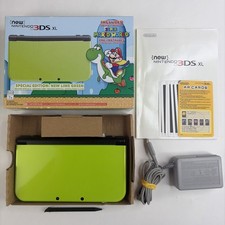
New Nintendo 3DS XL Lime Green Super Mario World Edition Complete Box US Model
$540.00 USD
Free shipping
★ 100% · 12,653 ratings
Super Mario World SNES US NTSC · 9/18/2026 1:08 AM
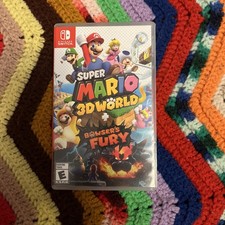
Super Mario 3D World + Bowser's Fury - Nintendo Switch - CIB Case + Cartridge VG
$32.00 USD
Shipping calculated
★ 100% · 249 ratings
Super Mario World SNES US NTSC · 9/18/2026 12:20 AM
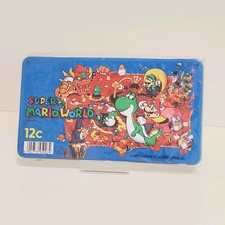
Super Mario World Mitsubishi Uni SEALED Star 12 Colored Pencils Nintendo Rare
$49.99 USD
+$18.00 shipping
★ 100% · 69 ratings
Super Mario World SNES US NTSC · 9/17/2026 11:55 PM

Super Mario World - SNS-MW-USA - (Super Nintendo SNES) Authentic & Tested Clean
$20.00 USD
Free shipping
★ 100% · 166 ratings
Super Mario World SNES US NTSC · 9/17/2026 11:13 PM

Nintendo Super Mario World for SNES Game Cartridge Tested & Working With Manual
$34.00 USD
Free shipping
★ 99.7% · 1,387 ratings
Super Mario World SNES US NTSC · 9/17/2026 10:41 PM
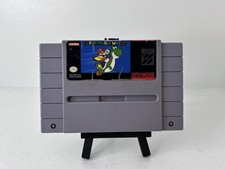
Super Nintendo SNES - Super Mario World - Authentic - Cartridge Only
$14.99 USD
Shipping calculated
★ 99.8% · 1,824 ratings
Super Mario World SNES US NTSC · 9/17/2026 10:04 PM

Super Mario World SNES Cartridge + Manual Tested Working Clean Label
$20.00 USD
Shipping calculated
★ 100% · 497 ratings
Super Mario World SNES US NTSC · 9/17/2026 9:38 PM
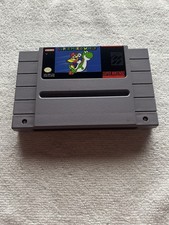
Nintendo Super Mario World for SNES Game Cartridge Tested & Working
$19.99 USD
Shipping calculated
★ 100% · 66 ratings
Super Mario World SNES US NTSC · 9/17/2026 9:25 PM

Super Mario 3D World + Bowser's Fury (Switch) Cart Only - Free Shipping
$64.99 USD
Free shipping
★ 99.5% · 29,273 ratings
Super Mario World SNES US NTSC · 9/17/2026 9:19 PM
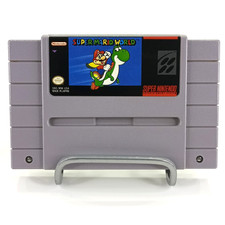
Super Mario World SNES Game Cartridge (Super Nintendo, 1991) Authentic Tested
$18.99 USD
+$6.99 shipping
★ 100% · 4,018 ratings
Super Mario World SNES US NTSC · 9/17/2026 9:09 PM
Super Mario World (SNES, 1991) Cartridge Only. Cleaned/tested
$16.00 USD
Shipping calculated
★ 100% · 241 ratings
Super Mario World SNES US NTSC · 9/17/2026 8:57 PM
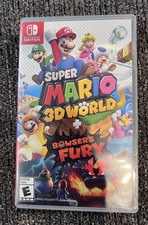
Super Mario 3D World + Bowser’s Fury Switch Game Case Tested Working
$34.95 USD
+$5.95 shipping
★ 100% · 170 ratings
Super Mario World SNES US NTSC · 9/17/2026 6:30 PM
FAQ
How much is Super Mario World (Super Nintendo) worth right now?
How often do qualifying deals appear?
Is Super Mario World (Super Nintendo) reproduced or commonly faked?
More from this franchise
Data freshness: last snapshot 2026-09-18 00:00 UTC .